The Gospel in Ancient Tigray
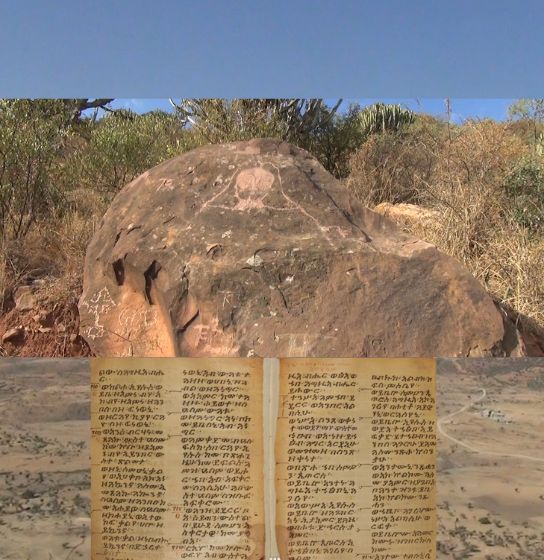
Discover One of Christianity's Greatest Untold Stories
When most people think of early Christianity, they imagine Rome, Jerusalem, and the Mediterranean. But one of the most powerful and least-known chapters of Christian history unfolded in Africa—in the ancient kingdom of Axum, in what is now Tigray.This is the story of how an entire kingdom encountered Jesus Christ and was transformed forever. It's a story of faith, courage, and a spiritual legacy that has endured for nearly 1,700 years.The Kingdom of Axum: One of the World's Four Great PowersIn the ancient world, there were four superpowers: Rome, Persia, China, and Axum. Yes, Axum—located in what is now Tigray, Ethiopia—was considered one of the four greatest powers on earth.Axum was a trading empire. Its ports on the Red Sea connected it to merchants from across the known world. Its currency was recognized in markets from Rome to India. Its influence stretched across the Horn of Africa and into the Arabian Peninsula. It was a kingdom of wealth, influence, and power.But in the 4th century, something extraordinary happened that would matter far more than military might or economic power.The Conversion of Axum: When a Kingdom Met JesusAround 330 AD, the Axumite kingdom officially converted to Christianity. This wasn't a slow, gradual shift. This was a kingdom-wide transformation, initiated at the highest levels of power.The story begins with a Syrian monk named Frumentius. As a young man, Frumentius was captured by raiders while traveling and brought to the court of the Axumite king. Rather than being destroyed, Frumentius became a trusted advisor and tutor to the king's children. More importantly, he shared the gospel of Jesus Christ with the royal family.The king was moved. His heart was transformed. And when the king embraced Christ, the kingdom followed.By 330 AD, Christianity was no longer a foreign religion in Axum—it was the faith of the nation. Axum became one of the earliest Christian kingdoms on earth, joining Rome and Armenia as among the first nations to officially adopt Christianity as a state religion.Think about the timeline: While Europe was still centuries away from Christianity becoming the dominant faith, while vast regions of the world had never heard the gospel, Tigray was already a Christian kingdom.Building an Ancient Christian CivilizationWhat followed the conversion was extraordinary. The Axumites didn't just adopt Christianity superficially. They built a civilization rooted in Christian faith and values.Churches and Monasteries: The landscape of Tigray was transformed by the construction of churches and monasteries. These weren't mere buildings—they were centers of faith, learning, and spiritual devotion. Places like Debre Damo, Axum St. Mary's, Wukro Cherkos, and dozens of others became monuments to Christian commitment.Many of these monasteries were built in remote locations—on mountaintops, in caves, in difficult-to-reach places. Why? Because the monks wanted to pursue a life of deep prayer, contemplation, and devotion to God. They were following in the footsteps of the desert fathers of Egypt, creating their own tradition of monastic spirituality.Preserving Scripture and Wisdom: The monasteries of Tigray became centers of learning. Monks spent their lives doing what might seem simple to us but was extraordinary in their time: copying Scripture by hand.Before the printing press, before photocopiers, before digital copies, the only way to preserve and spread the Bible was to have dedicated scribes painstakingly copy it, word by word, page by page. Tigrayan monks did this work with meticulous care. They copied Scriptures in Ge'ez (the ancient Tigrayan language), creating Bibles that would be used in churches for centuries.But they didn't just copy Scripture. They studied it. They wrote theological commentaries. They explored the deep truths of Christian faith. The monasteries of Tigray became centers of biblical scholarship and theological reflection.A Unique Christian Tradition: The Christianity that took root in Tigray had its own character. It wasn't a copy of Roman Christianity or the Christianity of the Mediterranean. It developed its own liturgy, its own practices, its own spiritual sensibility.The Ethiopian Orthodox Tewahedo Church—born in Tigray—became a distinct expression of apostolic Christianity, preserving practices and traditions that traced back to the earliest centuries of the faith. It maintained a deep connection to Old Testament practices (like fasting and dietary laws) while fully embracing New Testament faith in Jesus Christ. It developed a rich liturgical tradition, powerful music, and a distinctive theological approach.And crucially, it remained deeply rooted in African soil. This wasn't Christianity imposed from the outside by European colonizers (as would happen in other parts of Africa centuries later). This was Christianity embraced by an African kingdom, developed by African Christian leaders, and expressed through African cultural forms.Preserving Faith Through the CenturiesWhat's remarkable about Tigrayan Christianity is its endurance. For nearly 1,700 years, through empires rising and falling, through invasions and famines, through isolation and hardship, the Christian faith in Tigray has persisted.During the Islamic expansion of the 7th and 8th centuries, while Christianity disappeared from much of the Middle East and North Africa, it remained firmly rooted in Tigray. The faith adapted, evolved, and deepened, but it did not disappear.Through the medieval period, when Europe was in the Middle Ages and the world was being reshaped by various empires, Tigrayan Christianity continued. Monasteries remained centers of faith and learning. The liturgy was preserved. The faith was passed down generation to generation.Even when Tigray was isolated from the rest of the Christian world—unable to communicate easily with Rome or Constantinople or other Christian centers—the faith endured. Tigrayan Christians maintained their traditions, kept their monasteries active, and preserved their unique expression of apostolic Christianity.This is extraordinary. In a world where religions and empires rise and fall, where faith traditions disappear and are forgotten, Tigrayan Christianity has endured for nearly 1,700 years. That's longer than the entire history of the United States. It's longer than most nations have existed. It's a testimony to the power of faith deeply rooted in a people's identity and culture.Why This Story Matters TodayYou might be wondering: Why does this ancient history matter? Why should I care about a kingdom that existed centuries ago?First, it's a story of African Christian leadership. In a world where Christianity is often presented as a European or Western religion, the story of Axum reminds us that Africa was a center of Christian faith and learning from the very beginning. African Christians didn't receive faith passively from outsiders—they embraced it, developed it, and shaped it. Tigrayan Christians are part of a legacy of African Christian leadership that stretches back 1,700 years.Second, it's a story of faith that transforms nations. When the Axumite king encountered Christ through Frumentius, it didn't just change his personal life—it transformed an entire kingdom. Laws changed. Culture shifted. Priorities were reordered. This is what gospel faith does—it changes everything it touches. And it reminds us that faith isn't just a private, individual matter. It has the power to reshape societies.Third, it's a story of Christian unity. For 1,700 years, despite isolation, despite hardship, despite changing circumstances, Tigrayan Christians have remained part of the global Christian family. They've maintained apostolic faith and practice. They've kept the traditions that connect them to the earliest church. In our divided world, that's a powerful witness.Fourth, it's a story that belongs to all of us. If you're a Christian, Tigrayan history is your history. The monks who copied Scripture, the bishops who preserved doctrine, the ordinary believers who kept faith through difficulty—they're part of your spiritual lineage. Understanding Tigray's Christian heritage helps you understand Christianity itself more deeply.The Modern Tigrayan ChurchToday, the Ethiopian Orthodox Tewahedo Church remains the largest Christian denomination in Tigray. Millions of Tigrayans are part of this ancient faith tradition. They pray in Ge'ez, the language their Christian ancestors spoke. They follow liturgical practices developed over centuries. They maintain fasting traditions and spiritual disciplines rooted in monastic spirituality.But Tigrayan Christianity isn't frozen in the past. It's a living faith. Tigrayan Christians today wrestle with modern questions, serve their communities, raise their families in faith, and continue the tradition of their ancestors while engaging with the contemporary world.And they do this despite incredible challenges. The 2020 conflict devastated many churches and monasteries in Tigray. Some were damaged. Some were destroyed. Many communities were displaced. Pastors and priests shepherded traumatized congregations. Yet even in the midst of this suffering, Tigrayan faith endured. Churches continued to gather. Faith was passed to the next generation. The 1,700-year legacy continued.What We Can LearnThe story of Tigray's gospel heritage teaches us several things:About faith: Real faith is not temporary or fragile. It can endure for centuries, through hardship and change. It can transform nations. It can be preserved and passed down. The faith of the Axumite kingdom continues in Tigray today—that's the power of the gospel.About Africa: Africa's Christian story is ancient and deep. Long before European Christianity came to the continent, African Christians were already believers, scholars, leaders, and saints. Knowing this changes how we understand Christianity and Africa.About cultural identity: Faith and culture are intertwined. The gospel took root in Tigray not by erasing Tigrayan identity but by transforming and enriching it. Today, being Tigrayan and being Christian are inseparably connected—and that's beautiful.About hope: If faith has endured in Tigray for 1,700 years, through empires and invasions and hardships, then there's reason to believe it will endure into the future—even after the devastation of 2020. The faith of Axum is still alive in Tigray today.A Living LegacyThe next time you pray, remember that you're part of a faith story that includes Tigrayan monks copying Scripture by candlelight. You're part of a heritage that includes the Axumite king encountering Christ and transforming a nation. You're connected—spiritually and historically—to nearly 1,700 years of Tigrayan Christian faith.And remember that this story isn't finished. The gospel that transformed Axum continues to work in Tigray today. The monasteries, though some damaged, still stand. The faith, though tested, remains unbroken. The people, though suffering, continue to trust.This is why Tigray's story matters. This is why it's your story too.
